

Customizing Home Workouts for Maximum Results

Theme selected: Customizing Home Workouts for Maximum Results. Welcome! Here you’ll learn to tailor every set, rep, and routine to your goals, schedule, space, and energy—so your home workouts finally deliver consistent, measurable progress. Comment with your goals and subscribe to get tailored prompts each week.

Start With You: Assessments and Clear Goals

Run a simple baseline: timed wall sit, push-ups to good-form fatigue, a one-minute step test, and a 30-second balance hold. Record how each feels, your breathing, and technique. This snapshot guides exercise selection, volume, and recovery tailored to your real capabilities, not guesses.

Map Your Training Zone

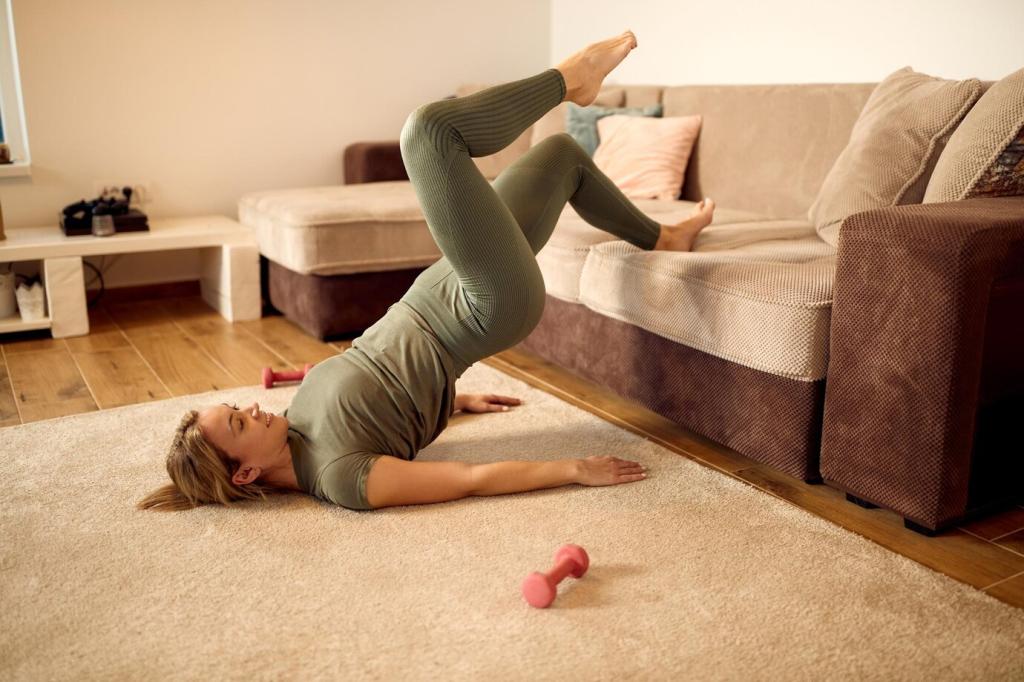
Measure your floor space and ceiling height, then list sturdy anchors like doorframes, sofas, and counters. This helps you choose moves that fit your environment—like couch-elevated hip thrusts, countertop incline push-ups, or towel-sliding lunges—ensuring each exercise is safe, repeatable, and effective.

Creative Equipment Swaps

No dumbbells? Use backpacks with books, water jugs, or heavy pots. No sliders? Use paper plates on carpet or towels on tile. Customize resistance by adding or removing items, and adjust tempo to increase difficulty. Your home offers more progression options than you might expect.

Program Your Week: Rhythm, Recovery, and Real Life

Notice when you feel most alert—morning, midday, or evening—and schedule demanding sessions there. Use low-energy windows for mobility or core work. This simple personalization reduces skipped workouts and improves quality, because you’re pairing the right challenge with the right body clock.

Program Your Week: Rhythm, Recovery, and Real Life

Customize a 3–4 day structure that fits life’s chaos. Try Full Body A/B, Upper/Lower, or Push/Pull/Legs—then add a deliberate deload every 4–6 weeks. Even if a meeting overruns, you can shorten sessions with EMOMs or AMRAPs while keeping your progression intact and purposeful.

Program Your Week: Rhythm, Recovery, and Real Life

Plan short, realistic recovery practices: five-minute mobility flows, a warm shower, and a consistent bedtime. Seven to nine hours of sleep and light walks improve adaptation. Personalized recovery keeps performance rising, because progress happens between sessions—when your plan honors your individual lifestyle.

Dial the Variables: Tempo, Intensity, and Progression at Home

Rate sets by RPE (perceived effort) or RIR (reps in reserve). Aim for RPE 7–9 or 1–3 RIR on main lifts. This personalization keeps you working hard enough to grow, but not so hard that technique collapses, especially when training alone at home.

Make It Stick: Motivation, Mindset, and Habit Design

Anchor workouts to existing routines—after your first coffee, before your evening shower, or right after work. Keep the first two weeks stupidly simple. This gentle personalization lowers friction, builds identity as a consistent exerciser, and makes missing a session feel unusual, not inevitable.

Make It Stick: Motivation, Mindset, and Habit Design

Track streaks on a calendar and celebrate micro-wins like one more rep or steadier tempo. Small, visible victories strengthen motivation. Personalize rewards that matter to you—an episode of your favorite show, a new playlist—so training becomes a satisfying loop you actually look forward to.

Adjust for Your Body: Joint-Friendly and Time-Crunched Options

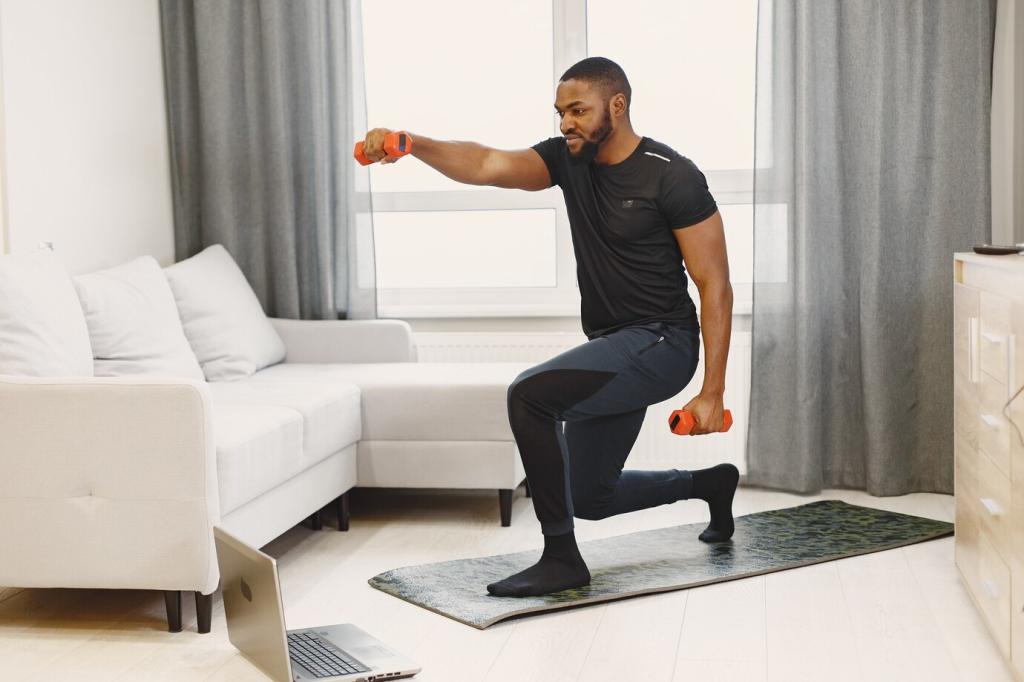
Swap jump squats for tempo goblet squats, burpees for walkouts, and high-knees for marches with powerful arm drives. These modifications reduce joint stress while preserving intensity. Customize rest intervals and rep targets to your current conditioning, building capacity safely and sustainably at home.

Adjust for Your Body: Joint-Friendly and Time-Crunched Options

Use ladders (2–4–6–8), EMOMs, or AMRAPs for quick, potent sessions. Pick two moves that hit major patterns—like squats and rows—and cycle tempos each week. This time-aware personalization ensures your plan adapts to reality, not the other way around, so consistency never collapses.
Meaningful Metrics Only
Track two or three metrics tied directly to your goal—like total weekly reps, best push-up set, or heart-rate recovery in one minute. Less noise means clearer signals, helping you adjust volume, rest, and tempo with confidence and avoid chasing every shiny new tactic.
Heart Rate and Breathing Cues
If you own a wearable, use heart-rate zones to personalize cardio intensity. If not, use the talk test and nasal-breathing intervals. These cues help tailor effort to your current conditioning, letting you push productively without turning every session into a punishing grind.
Monthly Review Ritual
On the last weekend of each month, review your log. Identify what worked, what dragged, and which tweaks energized you. Then update your plan: adjust exercise selection, tempo, or recovery. Comment your insights below and subscribe—our community thrives on shared experiments and real-world wins.
Kamkilo
Privacy Overview

This website uses cookies so that we can provide you with the best user experience possible. Cookie information is stored in your browser and performs functions such as recognising you when you return to our website and helping our team to understand which sections of the website you find most interesting and useful.